Monday, November 9, 2009

Anger

Anger is one of those emotions we all experience a lot, but hardly deal with properly, or talk about it. At times we even get angry at ourselves for being angry about something. Our logical brains tell us it is not worth your physical and mental health. Do not ruin your day over things that do not matter. But you cannot help what you feel. You just cannot help it. I have learned if I remind myself of a few things at such times, I may better be able to let go of the anger.

0) It is okay to feel angry at times. We are humans after all. The question is how do we let go of it, before it conquers us and becomes an inseparable part of us. Of course at first some physical activity and sport as well as talking about it can help release the tension. Be careful! It is easy to get trapped in the cycle of thinking and talking about it all the time and remaining angry.

1) By staying angry, I am letting the source of the anger, be it a person or a system, have control over my emotions, my performance, my life, and my health. Do I want to give this much power and control to what hurt me to begin with? Hell no.

2) The more we feed anger, the angrier and unhappier we get. Just stop watering this plant and it will die. This story helps*:

An old Cherokee chief is teaching his grandson about life: "A fight is going on inside me," he said to the boy. "It is a terrible fight and it is between two wolves.
"One is evil - he is anger, envy, sorrow, regret, greed, arrogance, self-pity, guilt, resentment, inferiority, lies, false pride, superiority, self-doubt, and ego.
"The other is good - he is joy, peace, love, hope, serenity, humility, kindness, benevolence, empathy, generosity, truth, compassion, and faith.
"This same fight is going on inside you - and inside every other person, too."
The grandson thought about it for a minute and then asked his grandfather, "Which wolf will win?"
The old chief simply replied, "The one you feed."


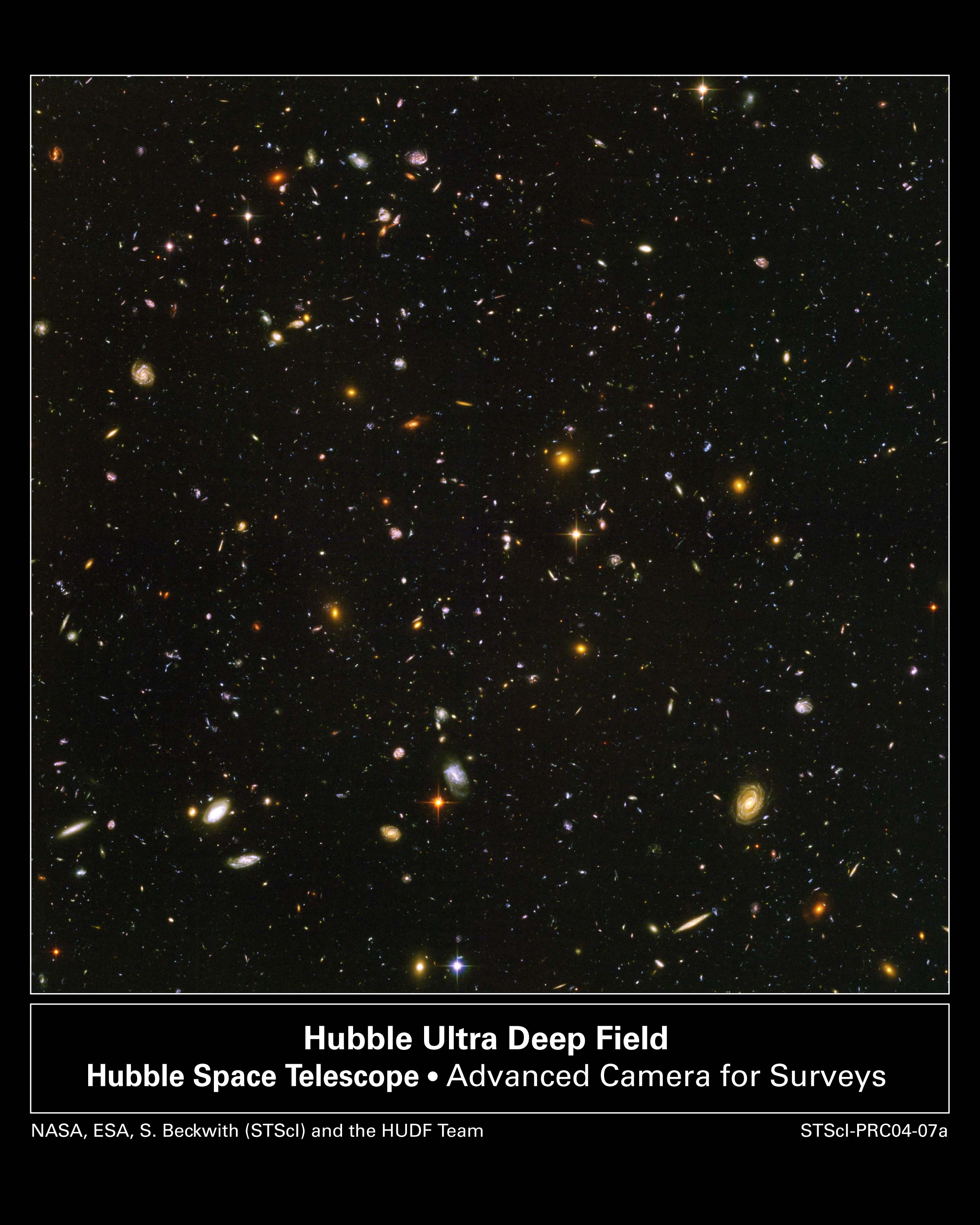
3) Look at things from a different perspective. I love the Hubble's Deep Field** image (click on the image below twice). It is taken from a very small portion of the sky. Every circle represents a galaxy like ours with its own planets, moons, and stars. Our earth is not even a dot in this image. How insignificant and small our problems are with respect to the universe, and how ridiculous and stupid we look for thinking they are so important to fight over.


---------------------------------------------------------------------------
* This seems to be a famous story but I first read it on page 157 of this book:
http://www.threelawsofperformance.com/
** For more information see the following links:
http://apod.nasa.gov/apod/ap040309.html
http://www.nasa.gov/vision/universe/starsgalaxies/hubble_UDF.html

Wednesday, October 28, 2009

Days 8, 9,...16? Who is counting?

As you might have noticed from my blog not being updated in a while, I am back to reality, and could not report on the remainder of once was a lovely vacation in as much detail as I used to. Surprisingly enough, I have had more than one request from friends anxiously waiting to hear about the rest of my journey. So, here I give a summary of the rest of my trip before moving on with my life :-)

I spent day 8-9 visiting all the famous areas in Paris: Notre Dame, Sorbonne, Montmartre, Hotel De Ville, Eiffel Tower, the Louvre museum, Champs Elysee, Bastille, etc. There are tons of movies, novels, pictures, and galleries, doing much better job at reporting what I saw than I could ever do. I realized most of what I knew about Paris and most of what I imagined about this city was from novels I used to read as a teenager. I came to the conclusion that I used to read much more about France or any other country for that matter, in my small room in Iran than all my years here. That was a sad realization.

Interesting facts I learned, some of which from the children book I bought for my nieces as souvenir, are the following:

- The Eiffel tower was built by Americans and initially the French did not like it because it was just ugly. I understood what they meant when I saw it from a close distance. The tower looks nice from far away as a whole, but the actual tower itself is just made of metal pieces connected to each other. Also, did you know at the very top of it, there are TV antennas broadcasting signals to Paris?
- Louvre was initially built to be a palace, and then became a museum. It was modified and completed over centuries before becoming like what it is today.
- I did not know French completely eliminate the handshake when greeting each other. Iranians somehow kiss while shaking hands. My cousin finally had to whisper in my ears: "they do not shake hands here", after the third time I was failing at a proper greeting with her friends.
- Historically the word Hotel means mansion in French (e.g. Hotel De Ville).
- Sacre-Coeur, meaning Sacred Heart, has remained white because its surface has a chemical material that acts like a bleach every time it rains. It was on the hills in the famous Montmartre neighborhood, where the movie Amelie was mostly recorded. I had a great view of Paris from there. They had a wine harvest festival that day and it was very crowded. Wines and Champagnes of different cities of France were being sold on the street and music was playing. It was too perfect a day to be true.

Visiting Sorbonne was a nice treat since I had no mental image of it beforehand. Many activists were standing in front of it. They were protesting against capital punishment globally. They had a brief description of countries, including Iran, that currently exercise capital punishment. Seeing names of so many political prisoners in so many different countries with issues I had no idea about, made me feel ignorant. I should read more on many countries and their people's struggles.

Although I had some expectation of how Louvre would look like, I never thought it was so huge and magnificent! I only had two hours to spend inside the world's largest museum before they close. Of course, Mona Lisa was the first stop, and as you have heard it from others, it is disappointing to see how small and dark it is. I was happier to see Hammurabi stone, remembering the first time I read about it in elementary school, and of course the Napoleon's apartment, reminiscing the Desiree novel I enjoyed reading so much as a teenager.

Oh, and how happy was I to finally walk in Champs Elysee and have a meal there, and of course seeing the Eiffel tower. Well, we had quiet a French experience the night we visited Eiffel. We were getting ready to head back to our hotel. We were tired and it was kind of chilly. Laleh suggested we have hot chocolate before taking the metro. I welcomed the idea. We went to the restaurant behind the closest metro stop. The waitress asked us if we were there for dinner, and we said no, just coffee and desert. She immediately took away the table cloth since we did not deserve it anymore for being cheap customers. I got a cappuccino and she got a hot chocolate. Can you guess how much was our bill? I am embarrassed to acknowledge this. My cappuccino alone was 7.5 Euros, or $11. That is by far the most expensive (small) cup of coffee I have had in my life, on a metal table with no table cloth! So, if you went to visit Eiffel tower, do not you dare stop for a meal, or even tea, at the restaurant behind that park and metro center.

Enough with the French! Back to England. I visited St. Paul cathedral, V&A museum, and I took the bus to Oxford for one day. When I visited V&A museum I felt like I had an overdose of museums. So, I avoided the sections they had on China, India, etc, and looked for something unique to that museum, which was not hard to find: V&A museum was the first museum in the world that had a photography exhibit. So, I just went to see their photography collection. They had a very nice collection, many of which were about life in the U.S. Here are some interesting and surprising pictures I saw there:


Oxford was a lovely college town with gorgeous trees and fall season. I did not have a map and did not need to search for anything. There was something to visit in every corner of the city: colleges, churches, of course the Oxford campus, natural history museum celebrating Darwin, Oxford's museum, beautiful parks, homes of the first person who made an automobile in U.K., editor of the Oxford dictionary, etc. I think I broke a record for number of museums one had seen in two weeks during my vacation. As I sat in a coffee shop for lunch and coffee, I could not help over hearing the conversation of the table next to me between an old Oxford professor and his female student. He was one of these professors everyone loved to take his classes. I already wanted to talk to him. He was advising his student with such care and patience. It reminded me of my own adviser and graduate study years. All of a sudden I missed both my adviser and being a student. I wish we were having a meeting like they were. As they finished talking, the professor stood, looked at me, and the book I had on my table. Without talking, his eyes told me I wish I could talk to you but I got to run to a meeting/class, what are you reading/studying?, a smile, and goodbye, and I had told him I wish we could meet and talk too, and no problem, I understand. It was an interesting silent conversation.

The last weekend I saw a musical in West End neighborhood in London, an area like New York's Broadway. They seemed to have many more theaters there though. We saw Wicked, and it was quiet a pleasant experience and a nice way to end my trip.

It did not turn out to be such a summary, did it? You got it all.
Friday, October 16, 2009

Day 7: To Paris

I took it easy and relaxed at home, and did some reading. In the afternoon, we were headed to Paris, the city I have been wanting so much to visit. The Eurostar ride was nice, quiet, and fast. After 2.5 hours, there we were, at Paris. It was night by then, and we headed towards our hotel, close to St. Paul station.

Apparently the region we were staying in, used to be a poor area in the old times, where Jews lived under hard conditions. Now, it is the center of the city and a nice area. Laleh did not look forward to riding the metros in Paris. "They are dirty and they smell", she claimed. "Come on, it is not that bad", I told her. After coming out of the metro station and walking through a narrow street, we found our hostel behind tall doors. We buzzed in and the door was opened from the inside.

We went to the office. The guy pulled out our reservation. "Passport", he asked for. First, I thought he was just checking our IDs. Then, I realized he wanted to keep it until the next morning to make sure we pay. I gave him my credit card, asking him to charge the costs right then. "The receptionist works here until noon, I cannot charge your card now, you have to come back in the morning". I asked for a receipt, a piece of paper indicating he has our passports. "No", he said. They never do that. What? If I come back in the morning and our passports had disappeared, what were we supposed to do? I told him keep my credit card instead, you can charge it in the morning. He did not accept. Laleh reassured me it was going to be fine, this is how they work here. I complied but I was not happy.

The hostel we stayed in used to be a Montessori school in 1700s, where nuns lived. It was well-maintained and clean. There were three single beds in our room, two of which were stacked. There were small lights on the wall, next to the pillow side of the beds, with switches in case each person wanted to read at night. In the bathroom, the light would go off every 5 seconds and I had to move to tell its sensors to come back on. It was annoying. We soon crashed.

Tuesday, October 13, 2009

Day 6: Green Park, Hyde Park, and the Buckingham Palace

This was a sunny day, a treasure in London to go and enjoy the parks. I wanted to visit the famous Hyde park and its gardens. I took the metro and came out of the Hyde Park corner station. As I came out, I saw statues and gates and tourists taking pictures. There were statues of war heroes, recognition of different nationalities and cultures. I even saw Palestine and Persia carved on the stone of a statue, but sadly I did not learn their significance and why they were mentioned. I joined the many tourists in taking pictures.

I then decided to move towards the Hyde park, only to realize I had gone in the opposite direction and had ended up in the second largest park, the Green park. It was just beautiful. Tall trees that were about to change colors, pigeons everywhere not scared of the people, green grass, perfect weather, the peace and quiet, all made it like walking in paintings of a dreamland. After a short walk, there was a small fountain-like area in appreciation of Canada and Canadian soldiers who fought for Britain. After a while, I gave up taking pictures of all the memorial statues.

I reached a large area with many more people, a tall statue with a golden part on top, and then I saw it across the street. The large Buckingham palace. What a nice surprise! I did not know it was just around the corner. I tried to remember what I had in mind of this palace, mainly through ceremonies for Princess Diana and then the Wedding of Prince Charles. Well, it did not look that glorious now. You could actually feel the palace had aged and the walls were not that clean and shining, like one would expect a palace to be. I do not know, maybe one comes with high expectations, or after seeing so many nice buildings I got spoiled, but when I saw the palace I was thinking to myself "this is it"?

Next, I really wanted to get to my original destination: Hyde park. Green park was triangular shape and as I was trying to go out of it from one end, I realized I had traversed the wrong side of it. I ended up walking a lot just to get out of the Green park. From the maps, I was under the impression that Hyde park is just across the street from Green park, but that was quiet misleading. It took me a while to discover Hyde park, but once I entered it, it was like entering heaven. There were small colorful gardens on each corner, usually with a small water pond in the middle. There was a nice large lake in the middle of the park. I sat there and treated myself to a cappuccino and cake. I noticed there were many Arabs around me. Some Arab women were covering their hair and were simple. Some, on the other hand, had so much make up and perfume on, it was not even nice. It was as if they were painted with brushes and getting ready to play on a theater for people to see the features of their face from hundreds of meters away. One of them looked at me from head to toe and back, and I was wondering what is she searching for? Maybe she was hoping to find something more interesting, not so plain and simple. On the other corner, two moms with their babies in strollers were having a chat over coffee and dessert. I thought they have a nice life. What is better than spending a day with your baby in such a nice place, having conversation with a friend over sweet pastries? What the hell am I doing everyday driving frantically back and forth to places, meeting deadlines, stressing over issues created by other people's mistakes in life just to get enough money to pay for plumbers and repairing my place and getting a vacation, which until the last day I did not even know I could take or not? Maybe I have it all wrong! But how did I know they were not traveling like myself? Who says their life is like this every day? I decided to think it was not the case for them everyday, just to make myself feel better and not ruin my vacation.

Different sections of the park had different signs. One was called the Peter Pan walk! The other was Princess Diana's! I decided to go visit the latter in her memory. It took a long while getting to princess Diana's fountain. It was designed using high tech computer modeling, and the fountain was supposed to be like her life: from the highest point it was pouring down in different directions, and the circle of water was accessible via small stone bridges in three different parts, an indicator of her openness to people of all walks and cultures.

And for day 6, that is all folks!

Thursday, October 8, 2009

Day 5: Greenwich!

I finally made it to Greenwich. The night before as I was brainstorming with Laleh about places to visit next, she said "It would be funny if after all this talk the only place you end up not seeing be Greenwich!". Her comment frightened me and I made it my mission to visit Greenwich the next day, rain or shine. It was a rainy day, not the best day to walk in countryside.

It took me about an hour with train to get there. As soon as I came out, there were signs for Maritime Museum, Naval College, Royal Observatory, all in the same direction. I followed the signs. I saw beautiful gates in front of nice set of buildings. I thought maybe this is where the Observatory was. Soon from the scene of so many students rushing in, I realized it was the Greenwich university campus. I learned later on the same day from the local newspaper on my way back that the Physics Nobel prize was given to Dr. Kao, a Greenwich university alumni. They were taking pride in him. How interesting that I was there on the same day. Also, the same newspaper reported that NASA scientists had found a new ring around Saturn. I thought it was very appropriate dedicating this day to visiting the Observatory.

I came out of the campus and went inside the next big building around the corner. They were welcoming and handed me brochures immediately. It was the Maritime museum, a place to learn about space exploration, stars, etc. Working at the home of Hubble and so many other missions, and having been to the aerospace museum in DC and different NASA centers, I did not feel the need to hear the same stories from them. Besides, I was running out of time. It was around 2 pm and the observatory would close at 5. I asked the lady working there about the observatory. She pointed me towards it. It was up on a hill. I thanked her, and started climbing the hill.

The higher I went, the nicer the view would get. The Maritime museum appeared like a wide White-house from the hill. Its view from the top with grass and trees around it was just gorgeous. I arrived at the top. The observatory building was small. I started exploring. In the first room, there were collections of telescopes that were made and improved over time. As I was trying to figure out the stories and the history of the place, an announcement was made that a public tour is available shortly. So, I happily joined. Our tour guide very nicely narrated the story of why this place was built, who lived there, and what came out.

In 1670s British government realized that they were losing a lot of money in trades since many ships drowned and sailors did not have much luck finding their positions in the ocean. Sometimes they meant to go west and they would make a mistake and go east, or the other way around. They did not have a way of determining longitude. Latitude was easy to determine from either the sun or the North star. One way to determine longitude was by knowing the position of the stars and observing them. However, there was not a good atlas of the sky at the time. So, the British government decided to build an observatory and support an astronomer in the task of determining longitude. The British government allocated only 500 GBP for building this observatory in 1670s. Even back then, it was not much money for such a task. So, the architect of the building, Christopher Wren who also was the architect of the St. Paul cathedral, found a cheap real estate in Greenwich and built the observatory for 525 GBP in 1675. He had practically got the land for free. So, there was no particular reason for choosing Greenwich other than the price of the land at the time.

The observatory was built and the first astronomer John Flamsteed moved there. He was considered Royalty in the British government and that place was his residence too. We saw his study, dining room, etc. Apparently Newton paid him visits too. It was amazing thinking I was in the same room that once Newton, Flamsteed, and Halley (the one the comet is named after) lived, met, and argued. Over decades Flamsteed worked on cataloging and preparing an atlas of the sky. However, he would not publish his atlas until his work was complete. Newton and Halley needed his results desperately. Newton got a position of authority over him and published his results in 400 copies. The angry Flamsteed burnt 300 of them. And here I thought publishing issues and disagreements were a new age problem!

Flamsteed, however, did not succeed in solving the longitude problem. The ships were still drowning and sailors were getting lost. The British government lost patience and allocated a 20,000 GBP award for whoever solves this problem, equivalent of today's 6 million GBP. Flamsteed passed away shortly after. His wife was determined to publish his results but she did not have enough money to do so. She sold all her furniture to pay for the publication of the results. Thus, most of the furniture in the observatory while belonged to that time, did not belong to Flamsteed personally. Some were acquired later though.

There was a different approach from astronomy for determining the longitude problem. It was via knowing the local time and the time at another place at the same time. By calculating the difference, one could figure out where s/he was with respect to that reference, say Greenwich. Well, this sounds easy but at the time there were no telecommunication system. One approach would be to take a clock with Greenwich time and carry it on a ship with you. You can always get the local time from the sun. This sounds easy but the clocks back then were not advanced. They had pendulums that could move irregularly on a moving ship. A mechanical watchmaker John Harrison spent his life making clocks that would work on ships. He in fact did solve the longitude problem and claimed the 20,000 GBP prize. The British government only paid him half of it unless he could reproduced 4 additional versions of the same clock and demonstrated that they worked equally well. Much of this resistance was also from the astronomical society who failed to solve the problem and did not like to see a watchmaker winning over them. After all even back then there were fights over funding and awards! The mad Harrison did not accept the 10,000 GBP. He wanted the complete prize and more than anything else he wanted the recognition that he had solved the longitude problem. We saw the watches that Harrison made. They started large and big and got more compact and smaller over time. The British government finally gave him the 20,000 after Harrison proved the other copies of the watch worked equally well. He only lived 3 years after that to enjoy the 20,000 GBP. The complete story is in a book called Longitude by Sobel. Apparently, it was only three years ago when he got the appropriate recognition and a statue of him was built. I do not know where in the city it is though.

We saw so many watches and telescopes there. There was a section where visitors could leave notes. The cards started with "Time stopped for me when ...". People from all over the world who visited the observatory completed the sentence differently. Here were some of the responses: when 9/11 happened, when I was diagnosed with breast cancer, when that special someone kissed me, when I heard my ex was getting married four months after we broke up because he did not like commitments, when shuttle Challenger collapsed, ....

We then went to the top floor, where the 28 inch telescope was. It is the 7th largest telescope in the world and the largest in the U.K. Of course the view of Greenwich from there was also beautiful. I had bought a postcard from the shop downstairs and could not find a better place to write it to my astrophysicist colleague back in Goddard, who would have appreciated this visit the most. "Hi from Greenwich to Greenbelt, I am sitting in front of the 28 inch telescope right now ...".

Just one week before my trip to the U.K., I had visited the Naval Observatory in D.C. as part of a conference event. Over there, they are now working on atomic clocks, to define a second up to so many decimal points. It is amazing how far we have come. Their telescope is 26 inch in diameter and they took pride in Asaph Hall for observing the moons of Mars with that telescope. That observatory is not as open to the public as the Royal observatory was. Mainly because the U.S. Navy is still actively using it and working in its campus. That campus was on Connecticut avenue close to vice President's house and we learned in that visit that vice President Biden sits in front of Hall's library there when giving his weekly address.

Finally, I visited the 0 degree longitude line passing through the observatory courtyard. I placed one foot on its left side and another on its right side, and took a typical picture that all visitors of the Greenwich Meridian take. On the ground they had marked famous cities with their relative longitude to Greenwich. Tehran and D.C. were both carved on the ground there.

I was drenched and soaked climbing up and down that hill and making it to the train. I am glad I did it, even though it was not a fancy place in London.

Wednesday, October 7, 2009

Day 4: Big Ben, Westminster Abbey, the Parliament, and the National Gallery.

This was the day I fell for London. I took the train to the Westminster station, just to come out and see the Big Ben in front of me. To me, Big Ben is associated with Around the World in Eighty Days, with Jules Verne, with my childhood. I could not believe I did not have to walk around much to find it. I asked someone foolishly: "Is this the Big Ben?". Sure it was. Then, across the street was the gorgeous Westminster Abbey. Further down, the Parliament. All these buildings were magnificent. Although I had seen everything quickly as they were located next to each other, I did not feel like leaving. I kept walking around these buildings. There was a park behind the Parliament. It was called the Victoria Garden. By American standards, it was such a small park. But it was gorgeous. One could not ask for better views. Colorful trees in fall in front of the Parliament on one side, the river and the London Eye on the other. I could stay there forever.

I still had a good portion of the afternoon. So, I hit the National Gallery. I could not believe my eyes. Room after room of so many large gorgeous paintings of so many famous artists including Monet, Manet, Van Gogh, Cezanne, Degas, and Picasso. Although I had seen some of the most famous paintings on postcards or large prints of them in many places,seeing the real ones, with the signature of the artists, learning about their lives and their relationships with their families, colleagues, and friends was something else. Like the British Museum, I could spend days in this museum, looking at each painting carefully, and learning about the stories behind each one of them. One of the many paintings I liked was called Cupid Complaining to Venus by Lucas Cranach the Elder.


Cupid complains to Venus of being stung by bees when stealing a honeycomb. This is to be taken as a moral commentary; as the inscription observes: 'life's pleasure is mixed with pain.'


I like London. I am beginning to feel sorry for myself, spending so much of my life just commuting to different places in Maryland.

Tuesday, October 6, 2009

Prayer

Aunt Nargess says a prayer for Natalie and Victoria tonight.
Aunt Nargess asks you to do the same please,
For tomorrow is a big day in their lives.
May the outcome be what is the best for them.